
NÄCKEN
A psychological horror from the depths of the Nordic.

Logline
A detached mother returns to the lake house she's long avoided. Drawn by the quiet promise of the water, her son begins to slip beyond her reach.

About Näcken
At the heart of the myth of Näcken lies a simple truth: what draws us to dark waters begins within.
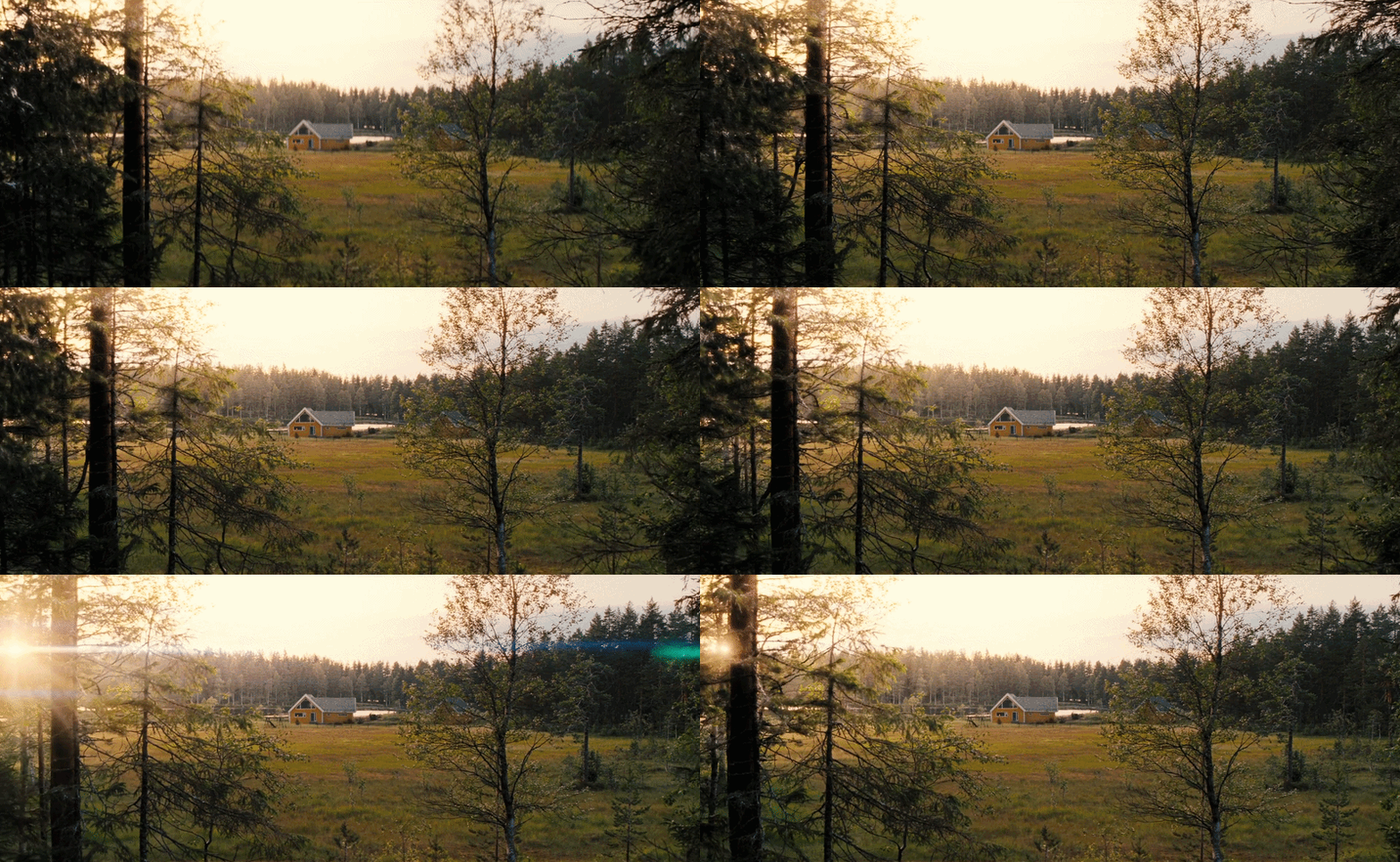
Blending psychological tension with the quiet menace of nature, the film unfolds with emotional restraint, allowing dread to rise slowly to the surface.
Rather than portraying Näcken as a folkloric creature by the water, the film imagines how such a presence would manifest today – seeping into human relationships. What draws people toward the lake is not just something in the water, but the promise of relief. As the pull of the lake deepens, the mother begins to feel her son slipping beyond her reach.


Why Now
Slow-burning horrors like The Witch, The Babadook and Hereditary have shown that audiences will embrace dread built through atmosphere, emotion and character.
Yet, Scandinavia - with its folklore, emotional restraint and affinity for darkness - has rarely claimed that territory in a defining way. Näcken sets out to do exactly that: a horror film where the uncanny is driven not by spectacle, but by grief, longing and the quiet terror of losing someone you cannot reach.

Character
Descriptions
Liv (47) | Mother
Liv wakes before her alarm. She checks her phone before she checks on her son. Breakfast is efficient: sliced fruit, packed bag, reminders about homework. When August tries to tell her a dream, she smiles distantly without slowing down. Recently divorced, she has reorganized her life into routines. If the apartment grows too quiet, she turns on the radio. If August stops talking, she asks what homework he has left. When he reaches for her, she hugs him, but her eyes are already elsewhere. At night she often sits awake long after he has fallen asleep, too tired to move, too wired to rest. On the drive north, she keeps her eyes fixed on the road when the lake first comes into view. When they arrive, she lingers in the car with the engine off as August steps out and Signe approaches, before finally forcing herself to follow. The house feels smaller than she remembers. The forest closer. The lake visible from every window. As a child, she listened to stories about what lived beneath the surface. As an adult, she quickly calls it superstition. When August asks another question about the lake, she cuts him off. “Enough.” She clears the dishes before he finishes eating. When Signe begins another story about the lake, Liv interrupts. When August is found floating face down in the lake, fear curdles quickly into anger. Liv tightens the rules: doors locked, curtains drawn, no more visits to the shore. But the pull only deepens. When Signe vanishes into the lake, Liv feels her hold on reality begin to slip - and something else slips beyond her reach too: her son. The first night she sees the lake, Liv pulls the curtains shut. Later she screams at the lake as childhood superstitions awaken. In the end, underwater, she opens her eyes.

Signe (80) | Grandmother
At dawn, Signe is found naked on a flat rock by the lake. A group of hikers stand at a distance, unsure whether she is sleeping or dead; her pale skin stark against the grey stone. When she opens her eyes, she seems more puzzled by them than by her own condition. She cannot explain how she got there. Signe lives alone at the edge of the lake. The house is quiet — not neglected, but pared down. A single cup on the table. A chair angled toward the water. The windows are rarely closed. Once a gifted violinist, she still keeps the instrument within reach. Her fingers are stiff now; when she plays, the sound splinters. Instead she places the violin in August’s hands, guiding his fingers where hers no longer obey. With August, she listens. She lets him finish every thought, leaning close when she answers, as if sharing secrets. She says little about music theory. Instead she asks what the water sounds like. When he plays a bad note, she smiles. “Try again. Listen.” She tells him stories about the lake - about music drifting across the water at night, about villagers who once danced until they vanished. “Where did they go?” August asks. Signe shrugs, “Somewhere else, I suppose,” and smiles. While her daughter paces the kitchen, her irritation growing, Signe turns toward the window, her gaze drifting to the lake. When Liv finally speaks, Signe only smiles and answers in the same gentle tone she uses with August. At dusk she walks to the shoreline without hesitation. She steps in without testing the temperature. When the water reaches her knees, she laughs softly. She is in love with the lake, and she does not believe it means harm.

August (8) | Son
Since his father left, August watches his mother closely. In the car, when she falls quiet, he reaches for the radio and plays a song she likes. When she doesn’t smile, he turns it off again. He carries groceries without being asked, clears tables and washes dishes — always glancing toward her as he works. The first time he sees Signe standing alone by the water, he watches her from the porch, half-hidden behind the doorframe. She does not turn around. When she steps knee-deep into the lake without shivering, he studies her, then moves closer through the trees. With his grandmother, he finds himself seen. She listens all the way through when he speaks. When she laughs, it is quiet and private, as if they share something. When she places the violin in his hands, his first attempts are careful, effortful, childlike. By the shoreline, something changes. His fingers begin to find passages he has never practiced, the notes arriving before he understands them. Alone, he plays toward the water and waits between phrases, as if expecting something to answer. One afternoon he lets himself slip beneath the surface. When Liv drags him out in panic, he studies her face — not frightened, but searching. After Signe disappears into the lake, August refuses to leave the shoreline. When Liv pulls him away, he fights her with sudden fury. “You’re the one who makes people leave,” he shouts. The following day, August plays until his fingertips split open, blood running down the strings. When Liv finally tears the violin from his hands and locks him in his room, he erupts, pounding the door until his fists redden. Only when the instrument is destroyed and his mother disappears beneath the lake does the trance break. For the first time, August sees the water for what it is. Back in the city, the routines return. School mornings. Packed lunches. Yet when night comes, the lake waits in his sleep. He wakes from nightmares - the music still playing somewhere in the dark - but Liv is there before he calls out. It is Liv who suggests they buy a new violin. When he begins again, the first notes are uneven, stubbornly human. He keeps playing. For a moment, a phrase emerges - eerie and familiar. He holds a note. It's beautiful.

Näcken
Näcken is never fully seen. He reveals himself in shifts. The lake lies flat while the trees bend in the wind. A white horse stands at the water’s edge, unmoving. A violin note carries across the surface long after the bow has been lowered. He does not leave the lake. He does not need to. The shoreline tightens around those who linger too long. The lake awaits. With August, he arrives as attention. The music begins as effort - a child trying to be heard. Then something alters. He plays, and pauses, as if listening for a call. By the water, his fingers find passages he has never practiced. In those moments, he does not seem alone. With Liv, he is less visible but no less present. On days she dismisses the stories, the surface remains calm. On nights when something in her loosens, the shoreline churns without wind. She stands at the dock, staring into the dark water. A scream cuts through the air. For a moment too long, she does not move. With Signe, there is no fear. She steps into the lake without testing the temperature. She stands waist-deep, eyes fixed on the horizon, ready to join him. When she walks beyond her footing, she does not call for help. The water closes, and stills. He does not call. He answers what is already there - yearning, grief, devotion. He deepens what is unspoken. He does not move toward anyone. They move toward him.


Get In Touch
Näcken is currently looking for the right producer. Get in touch.
Concept by Rasmus Thofte & Fredrik Tillberg
Creators of Tundra - tundraseries.com